The Advantages of Outsourced Assembly Partnerships with World Class Industries
Original Equipment Manufacturers (OEMs) face a constant balancing act. Production lines need to keep moving. Quality has to remain consistent. Costs have to stay under control. And somewhere in the middle of all that, someone has to manage the thousands of components that go into each finished product.
For many OEMs, the friction in their operations doesn’t come from their core design or engineering capability. It comes from the complexity surrounding production: managing supplier relationships, staging inventory, assembling subcomponents and coordinating deliveries. This is where an outsourced assembly partnership can change the equation, and it’s a shift OEMs are making every year. The global contract manufacturing market is projected to grow from $686.4 billion in 2025 to $968.7 billion by 2030, a 7.1% compound annual growth rate, according to BCC Research. Outsourcing production complexity has become a mainstream strategy, not an exception.
The Hidden Burden of In-House Assembly
Assembly and kitting compete directly with higher-value engineering and production work when internal team manage every step themselves. Engineering teams end up troubleshooting supplier issues, production managers spend time chasing backorders, and skilled technicians get pulled away from final assembly to prepare parts.
Much of that burden traces back to a labor market with little slack left. Deloitte and The Manufacturing Institute project that U.S. manufacturing could have 2.1 million unfilled jobs by 2030, at a potential cost of $1 trillion in lost economic output that year alone. Every technician diverted to kitting or supplier follow-up is one more hire an OEM has to compete for in an already thin labor pool.
The impact extends to the factory floor and balance sheet. Manufacturing floor space is expensive real estate, and there is less room for final production when space is filled with bins of sourced parts waiting to be assembled. U.S. industrial and warehouse space rents for roughly $9 per square foot annually on average in 2026, and considerably more in high-demand markets. Inventory ties up capital too: carrying costs for stored inventory typically run 20% to 30% of its total value per year, a widely used benchmark in supply chain management. That means a company sitting on $1 million in staged components could be spending $200,000 to $300,000 a year just to store and manage it. Add in rework labor, and every hour spent managing suppliers is an hour not spent improving products and production processes.
How Outsourced Assembly Changes the Math
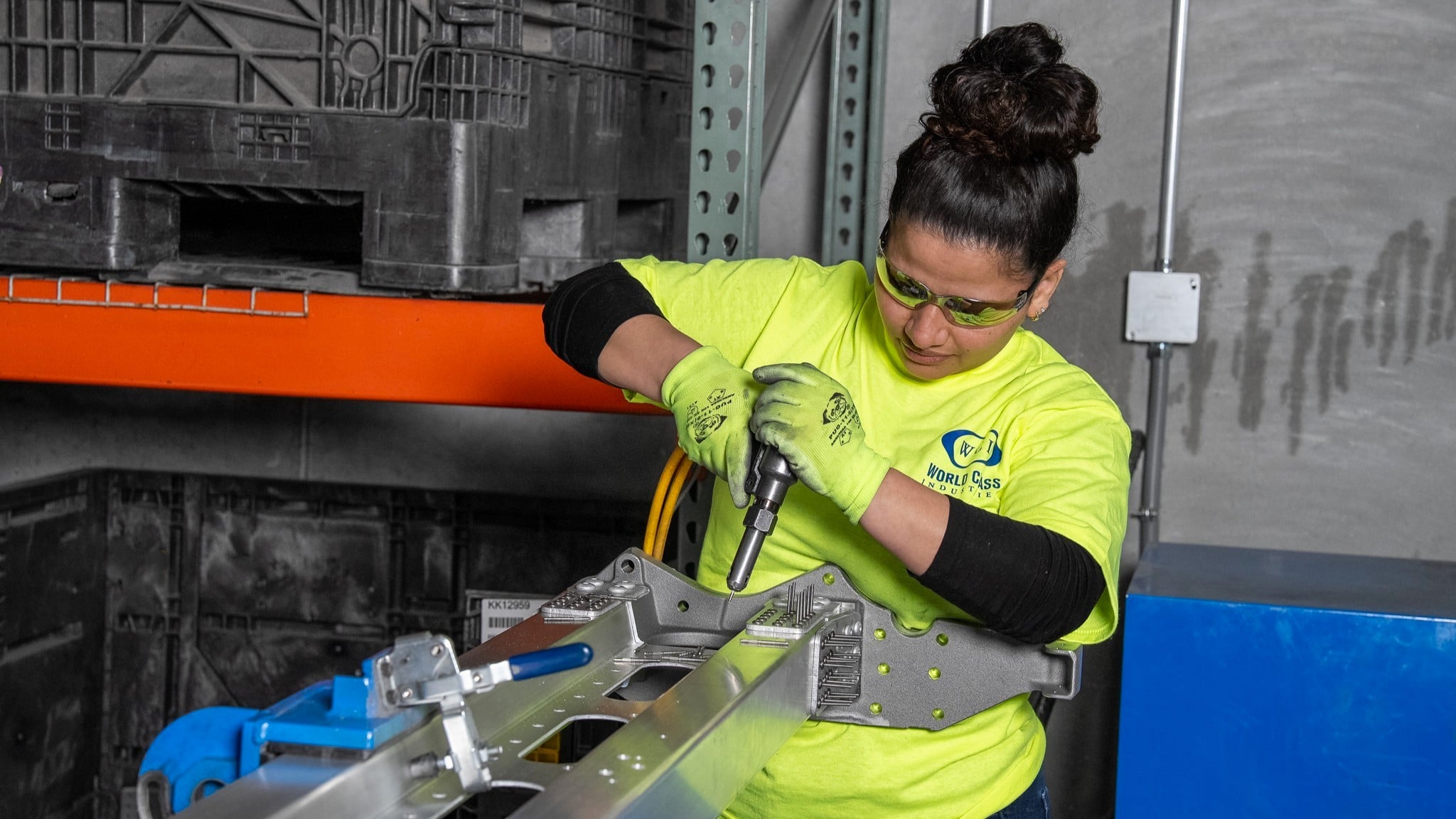
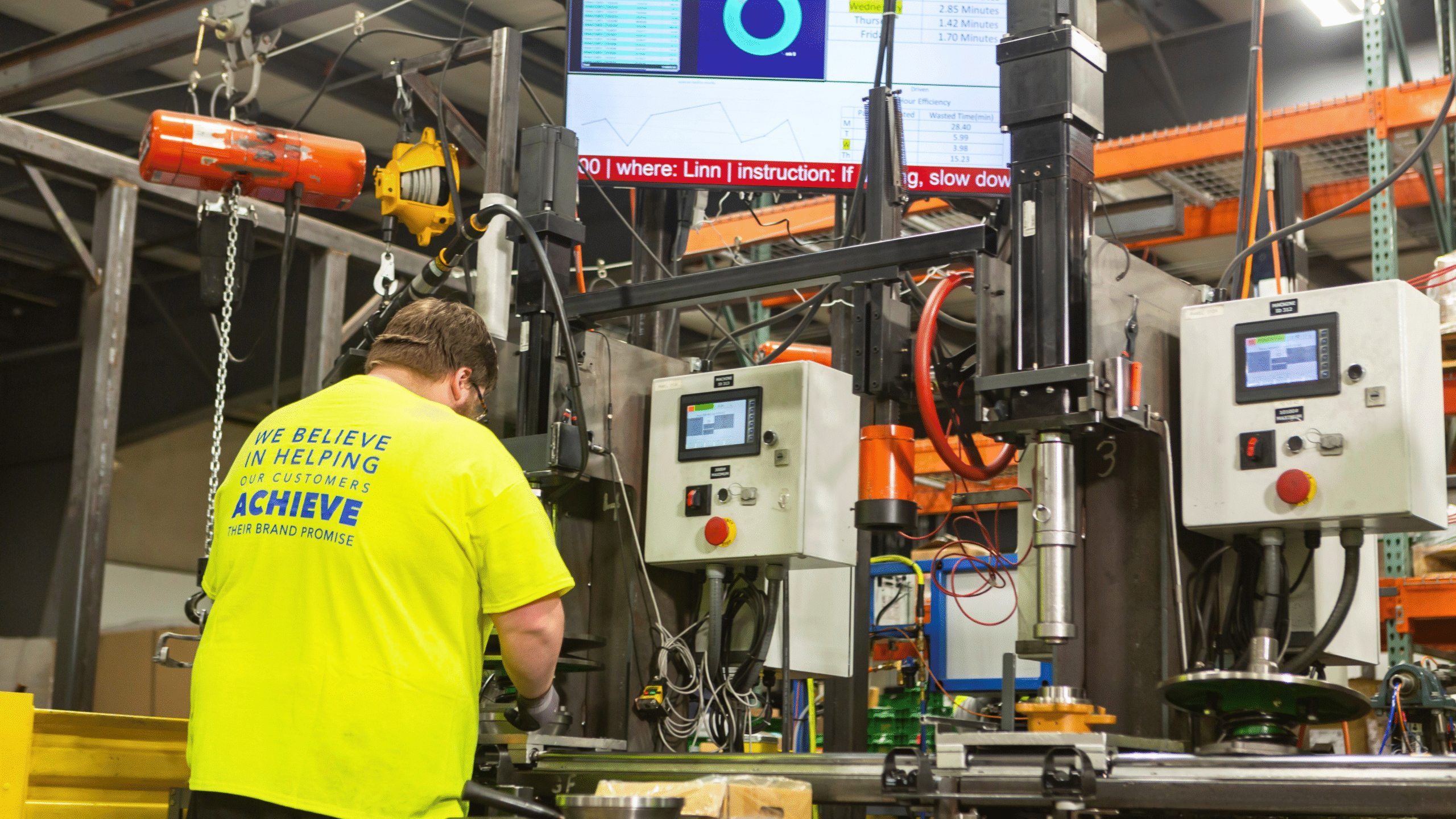
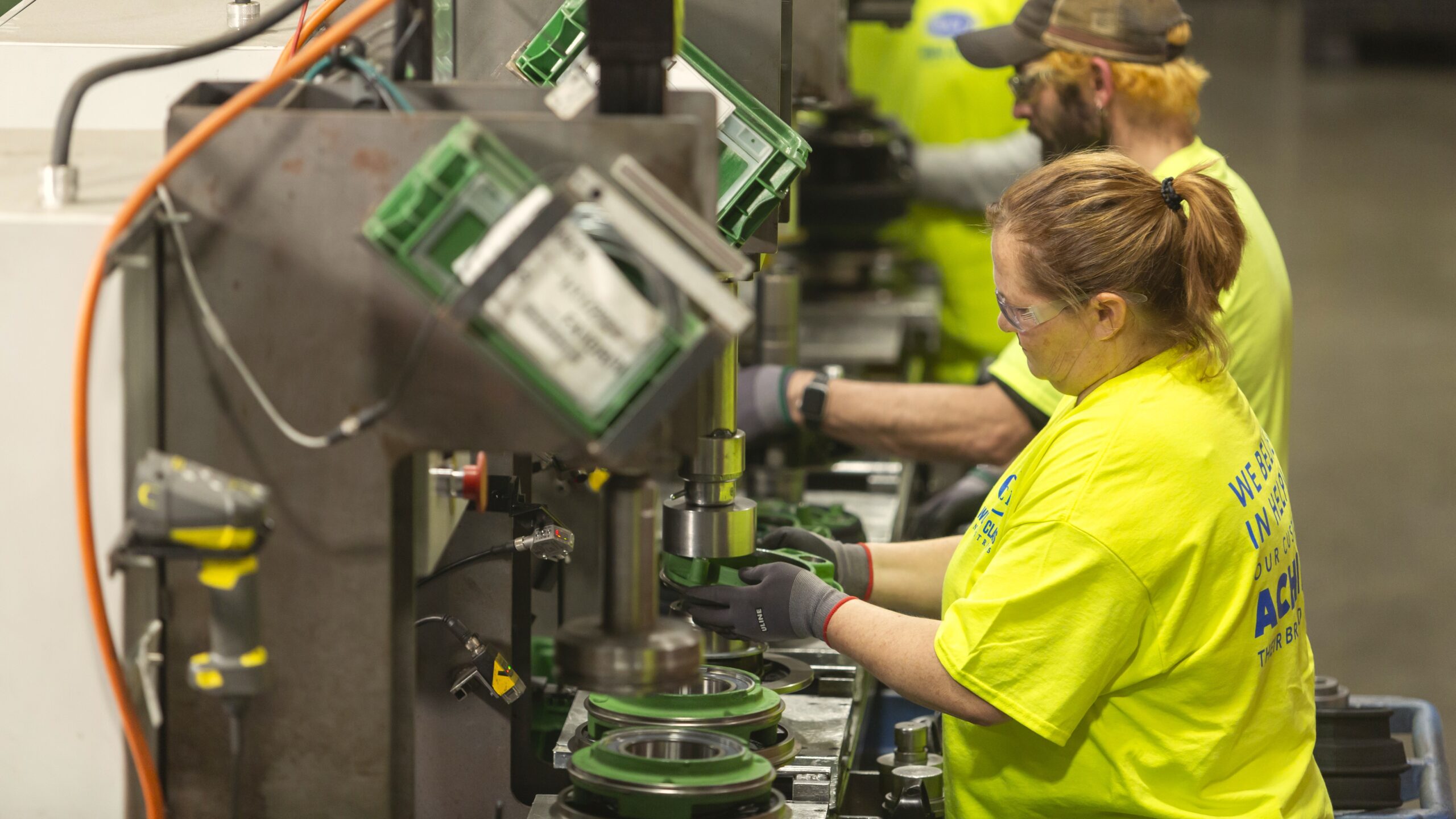
We step directly into the workflow to manage the noise. We consolidate hundreds of supplier lines into one streamlined process, manage procurement and inventory, complete the sub-assemblies and deliver finished modules on a schedule that matches production needs.
This approach solves several problems at once.
Labor becomes more predictable.
We handle the hiring, training and supervision of skilled assemblers. OEMs don’t have to recruit, onboard or manage additional personnel for those assembly processes, which matters most in a market where more than a third of manufacturing executives cite workforce skills as their top talent concern, according to Deloitte. Internal teams stay focused on design, engineering and final integration.
Floor space opens up
We act as a buffer instead of storing parts and partially completed assemblies on the factory floor. Components are received, staged and assembled off-site, then delivered in a sequenced flow that matches the production schedule. This frees up space that would otherwise carry the per-square-foot costs noted above, without a square foot of it touching final production.
Supplier management simplifies.
Many OEMs work with hundreds of even thousands of suppliers. Managing that many relationships takes time and creates room for errors in managing procurement, delivery, inventory and quality requirements. WCI consolidates that activity by managing procurement across all major commodity groups and combining everything under one integrated system.
When Outsourced Assembly Makes the Most Sense
The more complex an assembly becomes, the stronger the case for evaluating whether it belongs on the OEM’s primary production floor.
Labor-Intensive Assembly
When a process requires multiple touchpoints, significant manual labor or advanced assembly skills, internal resources are consumed that may be more valuable elsewhere in the organization. Outsourcing shifts that burden to a team structured around the assembly process.
Constrained Production Lines
Subassemblies and rework can consume floor space and create bottlenecks around the main production line. Moving those operations off-site relieves congestion and preserves capacity for final production.
Tight-Tolerance, Higher-Risk Builds
Assemblies involving hydraulics, electronics, or structural components require disciplined process and quality controls. We commonly deploy quality poke-yokes including; torque monitoring, press-force validation, visual inspection systems and comprehensive in-process and end-of-line testing to build in accuracy and traceability from the start.
The Fan Drive Assembly Example
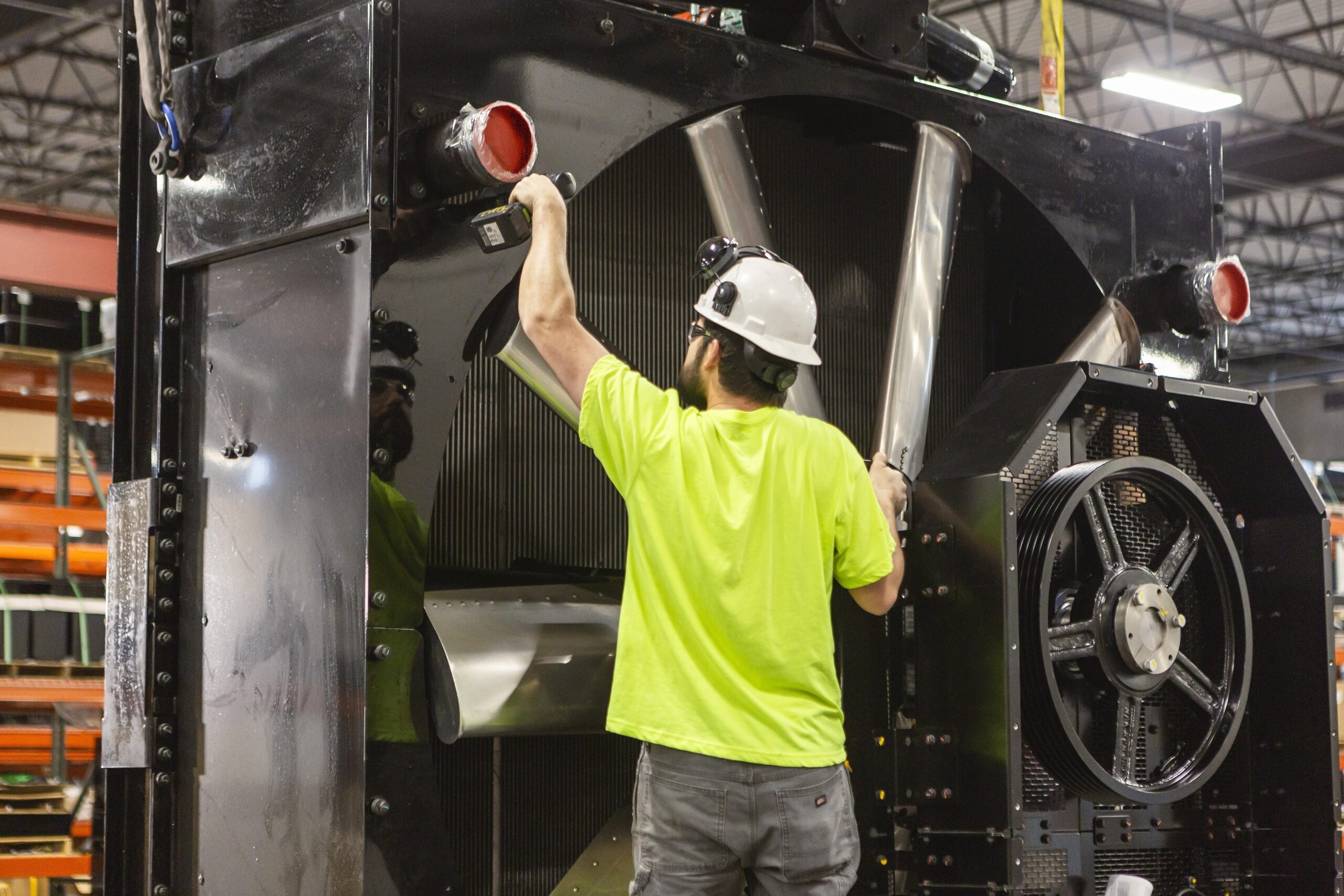
A global OEM was facing ongoing failures in its fan drive assemblies when they turned to us for help. The assemblies involved multiple mission-critical components that require precision alignment, torque control and robust testing.
WCI assumed responsibility for the entire assembly process, designed and validated new procedures, built a dedicated assembly line and implemented advanced quality checkpoints. Production transitioned fully to WCI, freeing the OEM’s internal team for new product development.
The results were measurable. The OEM gained a fully outsourced complex assembly program with improved reliability and quality in a previously failure-prone system. What had been a bottleneck became a dependable part of the supply chain.
Managing Costs and Capital
Building internal manufacturing capabilities requires capital. Equipment, facilities, staff and training all add cost before the first production unit moves through the process. Contract manufacturing offers an alternative that lets companies produce high-quality parts and assemblies without managing every detail in-house.
WCI spreads fixed overhead across multiple customer projects, so per-unit costs come down through economies of scale. Our purchasing team leverages an established, global supplier network across all major commodity groups to secure competitive pricing.
The model also changes the cost structure around equipment and labor. Capital expenditure can be eliminated, and labor costs become variable and shift with production volume instead of remaining fixed regardless of demand. This creates a meaningful win given that idle capacity and excess inventory, as noted above, can cost 20% to 30% of their value every year they sit unused.
Adapting to Market Changes
Demand fluctuates with seasonal trends, market shifts and new product introductions, all of which create uncertainty. Building internal capacity to handle peak demand can leave an OEM carrying excess capacity during slow periods. Outsourced assembly provides a more flexible model where production scales up or down without restructuring internal operations.
This flexibility prevents costly overproduction and creates capacity when orders rise unexpectedly, while also supporting faster time to market since the assembly infrastructure is already in place. From prototype to production, our systems are ready to go, creating a distinct competitive advantage for our customers who require this level of agility.
Outsourced Assembly as Supply Chain Integration
Outsourced assembly delivers the most value when it operates as part of the OEM’s supply chain rather than as an isolated vendor relationship. We act as an extension of the customer’s operations instead of as a separate vendor. This means aligning our goals with production demands, weathering market disruptions together and being completely transparent.
The objective is straightforward: simplify the supply and assembly system while protecting the quality, visibility and control the OEM requires.
A Smarter Path Forward
Outsourcing assembly doesn’t mean giving up control. With the right partner, it means gaining a team that builds to spec, protects quality standards and integrates directly with existing systems.
For OEM leaders managing complex production environments, the decision is not simply whether to assemble a product internally or externally. The more useful question is where each activity creates the most value. When assembly complexity consumes labor, floor space, capital or administrative attention that could support core production, moving to an integrated supply and assembly partner can create capacity where it matters most.
WCI helps OEMs manage that complexity through integrated procurement, kitting and assembly. Contact us to discuss where outsourced assembly could increase throughput and simplify your production operation.
About the Author
Ryan Murphy