How Power Generation OEMs are Scaling with Data Center Demand
Data-center expansion is putting new production challenges on power generation equipment manufacturers. As demand grows, OEMs must manage complex supply chains, multiple product configurations, inventory, floor space and quality requirements while maintaining throughput. Integrated procurement, kitting and assembly can help manufacturers address these challenges without adding unnecessary complexity to their operations.
Data centers require a steady supply of electricity to support servers, cooling systems, networking equipment and other infrastructure. Depending on the facility and its power architecture, that may involve utility power, standby generators, onsite generation, energy storage, transfer equipment, cooling systems and redundant equipment.
Key Takeaways
- Data centers used about 415 TWh of electricity in 2024, and the IEA projects that to more than double to 945 TWh by 2030.
- Power generation OEMs face supplier, space, labor, and traceability pressure all at the same time.
- Integrated procurement, kitting, and assembly services can move workload outside the OEM’s primary plant while keeping it connected.
- WCI’s integrated approach supported 300% order growth, 100% part traceability and 12,000 square feet of recovered floor space for a customer.
Why Are Data Centers Driving Demand for Power Generation Equipment?
Data centers need a steady supply of electricity for servers, cooling systems, networking equipment and other infrastructure. Depending on the facility and its power architecture, that can involve utility power, standby generators, onsite generation, energy storage, transfer equipment, cooling systems and redundant equipment.
The scale of that demand is significant:
- Global: The International Energy Agency (IEA) reports that data centers accounted for about 1.5% of world electricity consumption in 2024, or 415 TWh, and expects consumption to more than double to around 945 TWh by 2030.
- United States: A U.S. Department of Energy report prepared by Lawrence Berkeley National Laboratory found that data centers used about 4.4% of U.S. electricity in 2023 (176 TWh) and projected that share could reach roughly 6.7% to 12% by 2028.
- Share of growth: The IEA estimates that data centers account for nearly half of U.S. electricity demand growth through 2030.
The growth of power generation for data centers is creating more work for companies that manufacture generator sets, engines, radiators, heat-transfer equipment and related assemblies.
At World Class Industries (WCI), we support OEMs in the power-generation & cooling markets, including manufacturers of engines, generators, heat-transfer systems and radiators.
Why is Scaling Generator Production So Difficult?
Increasing output isn’t simply a matter of adding more assembly stations. Four constraints tend to appear together.
Complex BOMs
Generator equipment can have extensive bills of materials containing fabricated structures, cooling components, hoses, fasteners, fittings, brackets, controls and other parts from multiple suppliers. One late or nonconforming component can delay the larger assembly and disrupt production.
Product Variation
Generator equipment may differ by output, application, cooling requirements, customer specifications or installation environment. Those differences can affect the parts required, assembly processes, testing procedures and production traceability.
Space and Working Capital
Higher order volumes can expose capacity constraints throughout a manufacturing operation. OEMs may need additional warehouse space to hold incoming components, finished subassemblies and safety stock, which can tie up working capital while taking manufacturing space away from other activities.
Skilled Labor on Non Value-Add Work
Experienced team members can spend valuable hours sourcing parts, moving material, preparing kits and managing repetitive subassembly work instead of value-added manufacturing responsibilities.
Testing and documentation also need to remain just as important as production volume. Each assembly needs the appropriate inspections and tests, with production information connected to the correct unit.
How Does an Integrated Supply Chain Model Support Generator Production?
At WCI, we bring procurement, kitting and assembly together as part of our supply-chain services. Our procurement capabilities include supplier consolidation, sourcing, inventory procurement and management, part preparation and component kitting. Our assembly services include fixture and tooling design, PLC-supported processes, production sequencing, serialization, traceability, vision and scanning systems and electrical and mechanical testing.
For generator OEMs, this approach can help address several production challenges.
Procurement and Kitting
Managing multiple suppliers and coordinating component deliveries requires time, space and resources. Consolidating procurement and preparing components in production-ready kits can reduce the amount of material handling and coordination required within an OEM’s operation.
Parts can be organized before they reach the assembly area. Parts can be grouped in production sequence, reducing searching and unnecessary material handling.
Controlled Assembly and Testing
Complex generator components require consistent assembly processes across multiple configurations. We build subassemblies using documented work instructions, fixtures, tooling and production controls designed around customer requirements.
Depending on customer specifications, testing can include mechanical and electrical checks, pressure-decay testing, component verification and in-process or end-of-line testing.
Serialization and Traceability
Serialization connects an individual assembly with its production history. Supplier lots, components, process steps and test information can be associated with a serialized record, giving the OEM more information when a quality question arises.
Production data can also be structured for connection with the OEM’s systems, depending on project requirements. This information gives OEMs greater visibility into the assembly process.
Case Study: How WCI Helped a Generator Manufacturer Respond to Order Growth
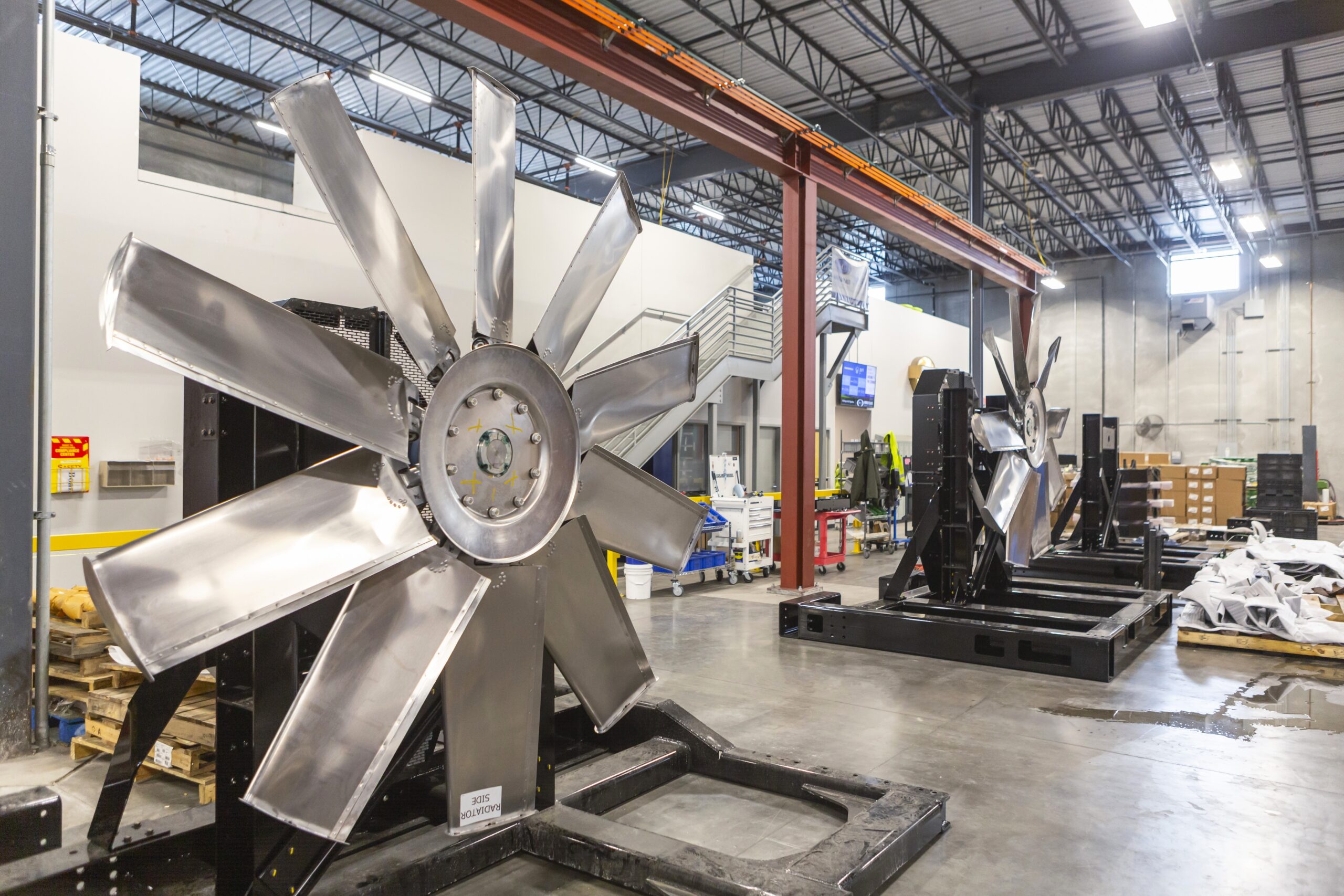
We have worked with a manufacturer producing some of the largest generators for a range of applications. The customer faced rapidly increasing demand alongside space limitations, nine radiator variations, supply-chain challenges and oversized components. We managed suppliers, inventory and production activities while providing additional floor space and handling support.
The results included 100% part traceability and support for 300% order growth. The project also recovered 12,000 square feet of floor space for the OEM .
The project demonstrates how integrated supply and assembly services can help a generator manufacturer respond to significant growth while managing space, inventory and production complexity.
What Should Generator OEMs Look for in a Strategic Partner?
When evaluating a manufacturing partner, power generation OEMs should consider:
- Industry experience with generators, radiators, engines and heat-transfer equipment
- Supplier and inventory management capabilities
- Available production space for components, subassemblies and oversized parts
- Fixture and tooling design, and the ability to handle multiple assembly variations
- Quality systems, including ISO 9001:2015 certification, lot tracking and serialization
- Testing capabilities appropriate to the product, such as pressure-decay and electrical testing help establish how a partner manages production requirements and documents completed work.
- Commercial terms, including inventory ownership, working capital requirements and production-data integration
At WCI, all locations operate under an ISO 9001:2015-certified quality management system and provide supply-chain and manufacturing services for OEMs.
How Can OEMs Prepare for Increased Demand in Power Generation for Data Centers?
The growth of power generation for data centers presents opportunities for generator manufacturers, but increased orders can also put pressure on inventory, labor, floor space and production control. Working with a supply-chain manufacturing partner can help OEMs move procurement, kitting, assembly, testing and traceability work outside their primary manufacturing operation while keeping those activities connected.
Preparing for increased demand in power generation equipment? Talk with World Class Industries about an integrated supply and assembly program built around your production requirements.
Frequently Asked Questions
How Can Generator Manufacturers Scale Production?
Supplier coordination, outsourced procurement, kitting, controlled assembly, additional production space, testing and traceability can help manufacturers respond to changes in demand and product volume.
What is Kitting in Generator Manufacturing?
Kitting is the process of gathering, preparing and grouping all the components for an assembly into a single, production-ready kit, often in assembly sequence. It reduces searching, material handling and line-side inventory.
What is Serialization in Generator Manufacturing?
Serialization assigns a unique identifier to an assembly and connects it with information such as components, supplier lots, production steps and test results. This creates a production record that can be used when reviewing an assembly’s history.
Should OEMs outsource Generator Subassembly?
Outsourcing can make sense when volume, product variation or floor-space limits strain internal operations. The decision should weigh partner experience, quality systems, testing capability, inventory ownership terms and data integration.
What Power Generation Capabilities Does WCI provide?
We provide procurement, kitting, mechanical assembly, testing, inventory management, supplier coordination, serialization and traceability for equipment OEMs. We support manufacturers rather than operating data centers or selling complete data-center power systems.
About the Author
Ryan Murphy