From Fragile to Agile: Building Resilient Supply Chains in Uncertain Times

Establishing supply chain resiliency remains one of the biggest challenges for domestic manufacturers in 2026, yet it’s absolutely crucial to the long-term success of your business. No matter the quality of your products, the past reputation of your business, or your current market share, your future success hinges on a continued availability of product at an effective price point.
However, building supply chain resiliency and agility becomes much more difficult in uncertain economic times. Facing multifaceted instability on the geopolitical level and still reeling from 2025’s tariff disruptions, there’s no shortage of uncertainty to go around the market.
That’s why domestic manufacturers and product managers are increasingly dialing back from an all or nothing approach when it comes to both international sourcing and lean yet risky just-in-time production plans, opting instead for supply strategy which emphasize robustness and reliability.
Offshoring Meets American Manufacturing: The Hybrid Approach
In some cases the answer is onshoring, keeping supply chains local and fully embracing American manufacturing. But in many cases a hybrid approach is more advantageous: cost-effective offshore manufacturing wherever it makes the most financial sense, augmented by U.S. manufacturing for any critical products to maintain supply should any international disruptions arise.
So how exactly do you go about setting up the most effective supply chain possible, one that truly combines the advantages of domestic and overseas manufacturing? That’s where World Class Industries (WCI) steps in. From reorienting your supply chain and streamlining the inventory management process to improving traceability for parts, we help you establish an optimized supply chain that keeps pace with your business as it grows.
The Fragility Trap: When Lean Becomes Brittle
For decades, the standard technical objective for Original Equipment Manufacturers (OEMs) was just-in-time (JIT) delivery. While successful in eliminating excess inventory and driving down cost, JIT relies on stable, predictable logistics and near-perfect execution. The inherent weakness lies in its structural dependencies:
Single-Point Failure: Reliance on single-source suppliers for critical components, especially those governed by complex tooling or material constraints. A disruption at any single node halts the entire downstream production line.
Lack of Buffering: Minimal or zero safety stock means there is no operational cushion to absorb sudden spikes in demand or unexpected lead-time extensions.
Limited Visibility: Traditional enterprise resource planning (ERP) systems often provide adequate tier-one visibility but lack the necessary technical insight into tier-two and tier-three suppliers, creating dangerous blind spots when disruptions occur.
The solution is not to abandon efficiency, but to integrate intelligent resilience directly into the supply chain architecture, moving from a single point of failure to a single point of control.
The Three Technical Pillars for Building Supply Chain Resilience
At WCI, we’ve found that achieving a resilient, agile supply chain requires precise technical execution across three main domains: digitalization, physical transformation, and strategic procurement. Let’s take a look at what those mean for your operations:
1. Digitalization and Data Backbone
True resilience starts with end-to-end transparency. Digitalization converts operational data into a predictive asset, moving beyond reactive reporting to proactive risk management.
- Lot and Serialization Tracking: Implementing systems for capturing component data at the point of assembly, including lot numbers, press force, and torque values. This ensures 100% traceability through the life of the part, allowing for immediate root-cause analysis and surgical recalls, protecting quality and reputation.
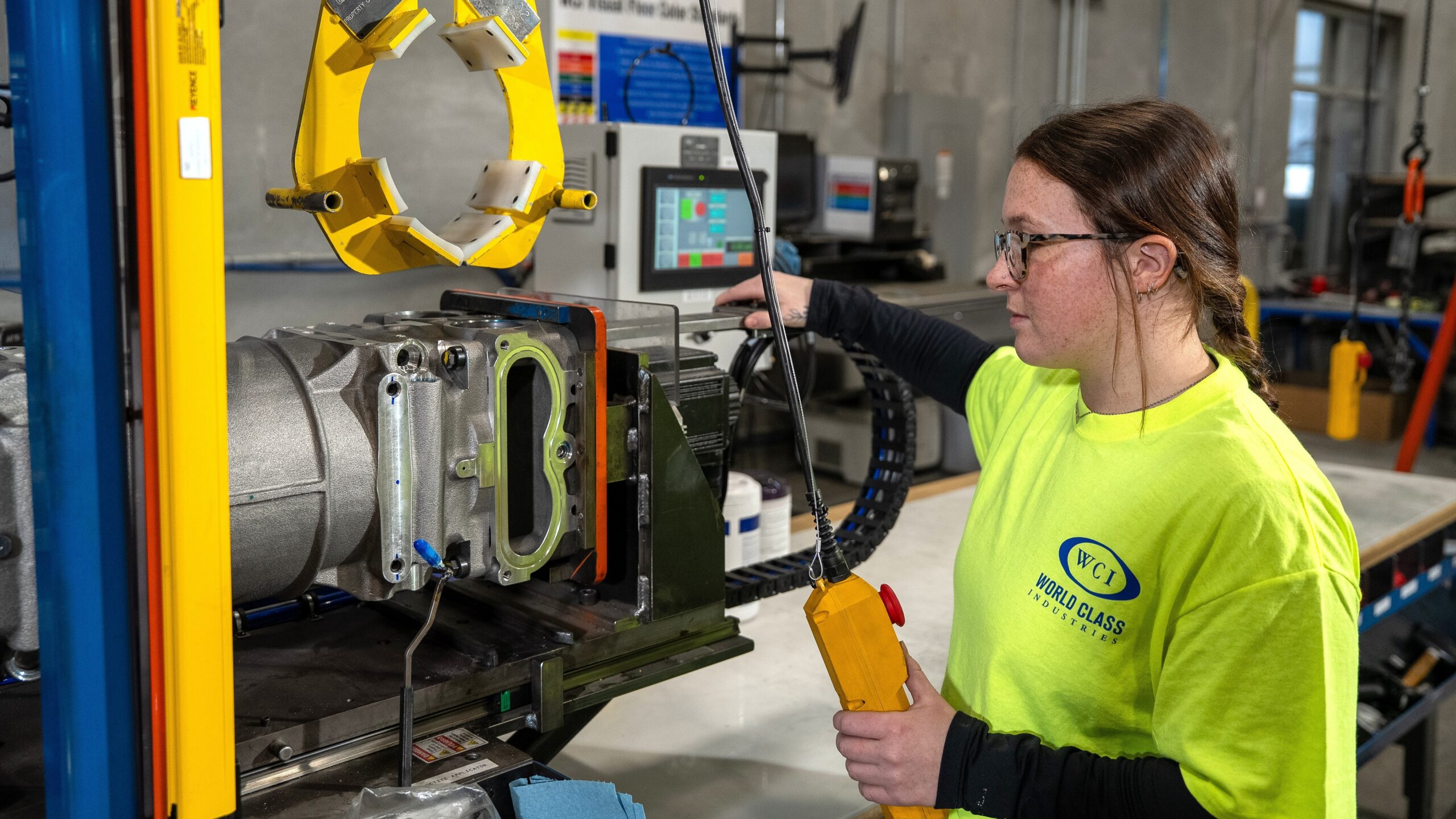
- PLC-Driven Quality: Utilizing programmable logic controller (PLC)-driven processes, state-of-the-art fixturing, and automated data capture within assembly cells. This integrates quality control directly into the production sequence, mitigating human error and providing reliable performance metrics against the build-of-materials (BOM).
2. Physical Transformation: Modularization and Kitting
The most powerful lever for agility is simplifying the complexity that reaches the OEM’s main assembly line. This involves shifting ownership of sub-tasks upstream to a specialized partner.
- From Parts to Sub-Assemblies: Instead of procuring thousands of individual components, OEMs can leverage partners for complex sub-assembly work (e.g., hydraulic valve blocks, fan drives, or cab assemblies). This transfers technical complexity, labor constraints, and required floor space away from the main factory, significantly increasing throughput and capacity.
- Component Kitting: Implementing a kit-to-build strategy where a partner receives components, aggregates them into a ready-to-use kit, and delivers it line-side. This eliminates inventory stocking, part repackaging, and critical floor-space limitations at the OEM facility, accelerating final assembly time by reducing material handling.
3. Strategic Procurement and Consolidation
Agility is directly linked to the flexibility of the supply base. Achieving true supply chain resilience means de-risking the source and centralizing management.
- Vendor Consolidation: By outsourcing procurement to a single strategic partner, OEMs can instantly gain access to a diversified global supply network without the administrative burden of managing thousands of supplier relationships. This partner then executes the multi-sourcing strategy needed to shield the OEM from geographic or single-supplier failure.
- Proximity Logistics: The ideal model positions assembly and kitting operations in close proximity to the customer (the OEM’s factory). This location strategy minimizes transit costs and, crucially, reduces lead times for complex assemblies, allowing the OEM to quickly accommodate volume drop-ins and dynamic demand changes.
Simplify and Strengthen Your Supply Chain with World Class Industries
The transition from a fragile supply chain to a robust, agile system requires a partner capable of managing both technical complexity and logistical execution
As a strategic supply and assembly solutions partner, World Class Industries provides the necessary infrastructure and expertise to make this transition seamless. By offering a single point of contact for integrated procurement, data-rich assembly, and customized order fulfillment, WCI assumes ownership of supply chain complexity, empowering OEMs to redirect focus and capital back to core competencies: product development and innovation.
Partner with World Class Industries today to build the resilience and flexibility your business needs to stay ahead.