Why the Supply Chain is the Backbone of Modern Manufacturing
The importance of supply chain efficiency and effectiveness can’t be overstated. Actively managing your supply chain means overseeing and streamlining the system that connects every part of your business. From procurement to production to final delivery, the supply chain affects your throughput, customer satisfaction, and profitability.
At World Class Industries (WCI), we help OEMs strengthen every link in their supply chain so that they can produce, ship, and scale with fewer disruptions.
What Does Supply Chain Management Include?
Your supply chain is the full process of moving your products from procuring raw materials to your customers receiving finished goods. It’s no longer just thinking about your Tier 1 suppliers – today’s pace of change requires that you have visibility down into your Tier 2 and Tier 3 base. Supply chain management (SCM) is the discipline of planning, coordinating, and optimizing the supply chain.
For OEMs, supply chain management typically includes:
- Sourcing and procurement of parts or materials
- Inventory control and forecasting
- Freight and logistics planning
- Warehouse and production integration
- Order fulfillment and distribution
A strong supply chain reduces waste, increases throughput, and ensures you meet customer expectations with fewer delays and cost overruns.
What Are the Main Steps in a Supply Chain?
The importance of supply chain components includes proper setup and management of the procurement, production, and product distribution stages.
Procurement
This stage involves sourcing materials and components from vendors. OEMs must align internally and define their sweet spot between high quality and competitive pricing while avoiding delays and supply constraints. Procurement errors like poor supplier selection, ineffective global strategies, logistics surprises, overpaying for parts, or subpar vendor on-time delivery can ripple through your production process and devastate your project timeline and budget.
Production
Turning raw materials into finished products is typically the most monitored portion of a supply chain. Efficiency here requires everything from smooth scheduling and reliable parts delivery to quality control and machine uptime. If production slows, revenue and customer satisfaction also decline.
Distribution
Finished goods must be delivered to customers or distribution points on time and in good condition. Your distribution plan has a direct impact on the customer experience. A setback in delivery can be costly due to rush delivery fees, take up additional space in your facility, and damage your reputation.
Why the Supply Chain Is Critical to Your Success
Customers expect rapid fulfillment, transparency, and zero errors. While there is no guarantee every order will go as planned, a well-managed supply chain supports these expectations.
Here are four significant ways WCI improves supply chain management:
Faster Fulfillment
Streamlined supply chains move materials and finished goods more quickly, cutting delays and increasing delivery accuracy.
Cost Control
Real-time planning and forecasting reduce overhead, help prevent over-ordering, and shrink waste.
Stronger Supplier Relationships
Reliable data sharing and regular communication help avoid surprises and strengthen vendor accountability.
Customer Retention
Happy customers are repeat customers. When the right product arrives on time, in the right quantity and condition, your brand becomes the trusted choice.
WCI Helps OEMs Build Stronger Supply Chains
Our supply chain management team has a long history of leveraging our expertise to give OEMs a clear competitive advantage.
Here are a few of the key tools and strategies we use:
Integrated Forecasting and Inventory Tools
We connect directly with your demand signals and use integrated platforms to manage part availability, replenishment, and delivery. That means fewer shortages, faster response times, and smarter inventory procurement across your global supply base.
Just-in-Time Fulfillment
With WCI, you don’t need to warehouse excess parts or risk costly shortages. We identify and plan to buffer stock and deliver what you need, when you need it – so you can keep production moving without eating up excess space on your factory floor.
Freight and Logistics Coordination
Managing international or domestic freight becomes easier with WCI as your single point of contact. We streamline container usage, reduce dunnage, and ensure packaging is optimized for efficiency and cost.
Custom Packaging and Lineside Delivery
Whether it’s repacked part kits or returnable racks, we make sure every item is delivered in production sequence and ready for lineside consumption. This efficiency reduces material handling time and limits inventory movement inside your plant.
Visibility and Control
We provide clients with real-time information about their supply base so they always know what’s on hand, what’s in transit, and what needs to be reordered.
Case Study #1: Solving a Global Sourcing Problem
An OEM customer sourced several critical parts from India. To meet their cost-effective goals, parts had to ship in full containers, which introduced new problems for their factory: excess dunnage, wasted space, inefficient handling, and crowded factory floors. Vendor coordination also proved complex.
WCI took over the whole supply chain to simplify and streamline operations.
Here’s what we implemented:
- Assumed full supplier ownership and coordination
- Managed inventory, performed secondary part quality inspections
- Implemented just-in-time part delivery utilizing returnable to free up factory space and eliminate factory dunnage
- Provided proactive order and part shipment status
As a result, the customer reduced handling time, eliminated shipping waste, and transitioned management of an international supplier.. Our single-point-of-contact model reduced complexity and gave their team more time to focus on higher-level challenges..
Case Study #2: Streamlining Glass Assembly to Improve Performance and Profitability
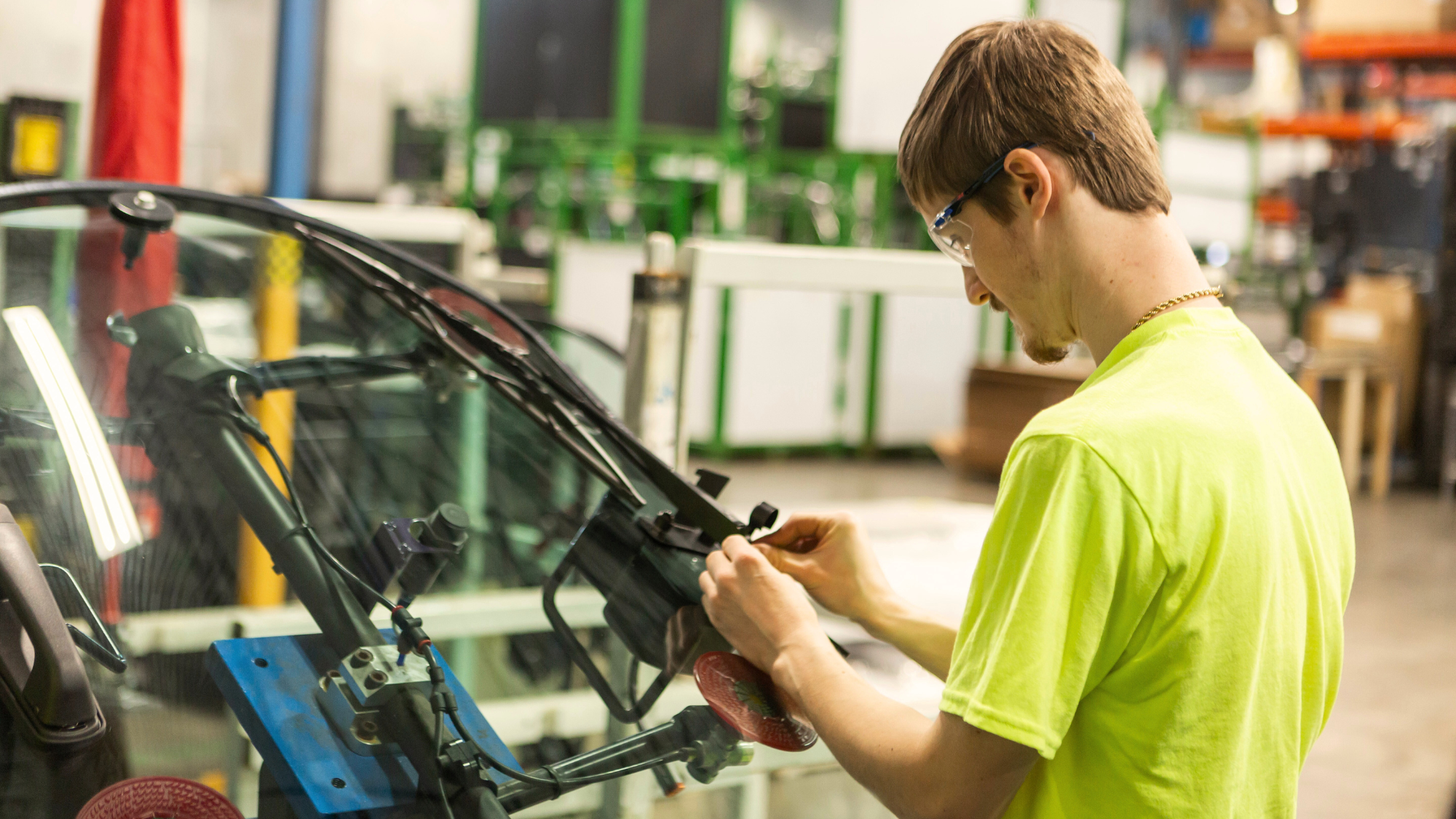
A global OEM in the construction and industrial vehicle market was facing recurring problems with a complex supply chain, excess scrap, and limited factory space. WCI stepped in with a turn-key solution that improved cost, quality, and factory efficiency for glass assemblies.
The OEM’s in-house teams were struggling to maintain quality and throughput due to:
- Door fitment challenges
- An inefficient inventory strategy that ate up valuable production floor space
- High minimum order quantities driving up inventory carrying costs
- Ongoing factory scrap from mishandled or defective parts
Each of these problems added hidden costs, and none could be fully resolved without better supply chain control.
Using our global supplier relationships and in-house glass assembly expertise, we helped the customer stabilize their supply chain and eliminate the root causes of loss.
Our Team:
- Introduced advanced glass adhesion and handling technology
- Delivered sequenced, just-in-time glass assemblies to the line, reducing WIP and square footage dedicated to inventory storage
- Developed optimized packaging that works for both production and aftermarket use
- Built in end-of-line testing to ensure consistent quality across components
- Worked with suppliers to reduce minimum order quantities, eliminate scrap, and improve material utilization.
The Results:
- 7% scrap reduction from improved material handling
- 8,000 sq. ft. of factory floor space recovered by moving inventory and assembly off-site
- >5% total cost improvement tied to reduced material costs
This project is a prime example of how WCI combines innovative supply chain strategies with hands-on assembly expertise to eliminate internal bottlenecks.
Ready to Strengthen Your Supply Chain?
World Class Industries delivers end-to-end supply chain solutions that help OEMs scale smarter, ship faster, and reduce risk. From global sourcing to local delivery, we take care of the details, so your team can focus on what they do best.
Contact WCI today to find out how we can help you reduce freight costs, increase efficiency, and improve inventory performance.