Overcoming Global Component Supply Challenges in Heavy-Duty Equipment
The last few years have been a sustained period of disruption for the heavy-duty equipment industry. First, pandemic-era lockdowns choked off the flow of new machinery and component supply and sent used equipment prices soaring, forcing companies and their consumers to patch up aging fleets far longer than planned. Just as signs of recovery appeared, a new wave of challenges reshuffled the global trade deck: shifting trade policies, unpredictable tariffs and recurring logistics bottlenecks made the simple act of sourcing parts – from massive castings to tiny semiconductors – a formidable puzzle.
At World Class Industries, we live in this world every day. Our work with global OEMs has given us a front-row seat to these challenges and, more importantly, a clear view of what builds real stability. So, what’s the goal? To construct a supply chain that remains steady when conditions change around it.
The New Landscape of Scarcity and Cost
The current strain on component supply is multifaceted. It starts with simple scarcity. The backlog for new machinery remains high and this pressure ripples down to the parts needed to keep existing machines running. When a critical hydraulic pump or a custom-machined gear is months out, entire projects can stall.
Layered on top are cost pressures from new tariffs. These are direct hits to the bottom line. When tariffs rise on imported steel or key electronics from certain regions, manufacturers face an impossible choice. To absorb the cost and watch margins shrink or pass it on and risk losing customers. These costs can appear deep within the supply chain, hidden at the tier-two or tier-three supplier level. This makes them difficult to predict or manage without deep visibility.
Finally, logistics themselves have become a wild card. Labor disputes, port congestion from companies rushing to import goods ahead of tariff deadlines and even climate events can snarl transportation networks overnight. Relying on a single route or port for a crucial component supply line is a gamble few can afford.
The WCI Approach to Building Stable Supply Chains
Reacting to each new crisis is exhausting. The winning strategy is to build inherent strength into your supply network. Based on our decades of experience, here are the main lessons we apply for our partners.
End-to-End Visibility
You cannot manage what you cannot see. True resilience begins with clarity that stretches beyond your immediate suppliers. Many companies have good visibility into their tier-one partners, but disruptions often originate deeper in the chain. We focus on creating a digital backbone for the supply chain. This means implementing systems for lot and serialization tracking, providing 100% traceability for every component. When you know not just where a part is, but its entire history and origin, you can identify risks earlier, manage quality proactively and respond to issues with precision instead of guesswork.
Create Smart Redundancy
The old mantra of single-source suppliers for cost efficiency has shown its fragility. Diversification is the new imperative, but it must be strategic. It’s not about having five suppliers for every part. It’s about building a trusted but geographically diverse network for the most important components. A proven model is pairing a lower-cost offshore supplier with a local or nearby manufacturing partner, providing a backup. If shipping from overseas halts or a new tariff hits, your nearby partner can increase production to keep your line running. We manage this entire network for you, serving as your one point of contact to a wide range of suppliers.
Simplify What Hits Your Line
One of the fastest ways to de-risk your main assembly line is to reduce the number of individual parts that arrive at its door. We achieve this through physical transformation strategies like kitting and sub-assembly.
- Kitting: Instead of your floor space being crowded with loose components and boxes, we package everything needed for a specific module into a single, ready-to-install kit. This slashes handling time, minimizes errors and frees up valuable factory space.
- Sub-Assembly: We take on the complex, labor-intensive work of building complete subsystems – like hydraulic valve blocks or electronic control units – before they ever reach you. This transfers the burden of managing that component supply and assembly complexity to us, allowing your team to focus on final integration and innovation.
Develop an Inventory Strategy
The “just-in-time” models work well when conditions are stable. But current volatility requires more dynamic planning. This involves strategic inventory positioning. Holding safety stock of the most critical, long-lead-time components in locations that allow for rapid deployment. It also means using data for scenario planning. You can develop contingency plans by modeling the impact of tariff changes or port closures before they happen. This shift from reactive firefighting to proactive preparation makes all the difference.
The Result
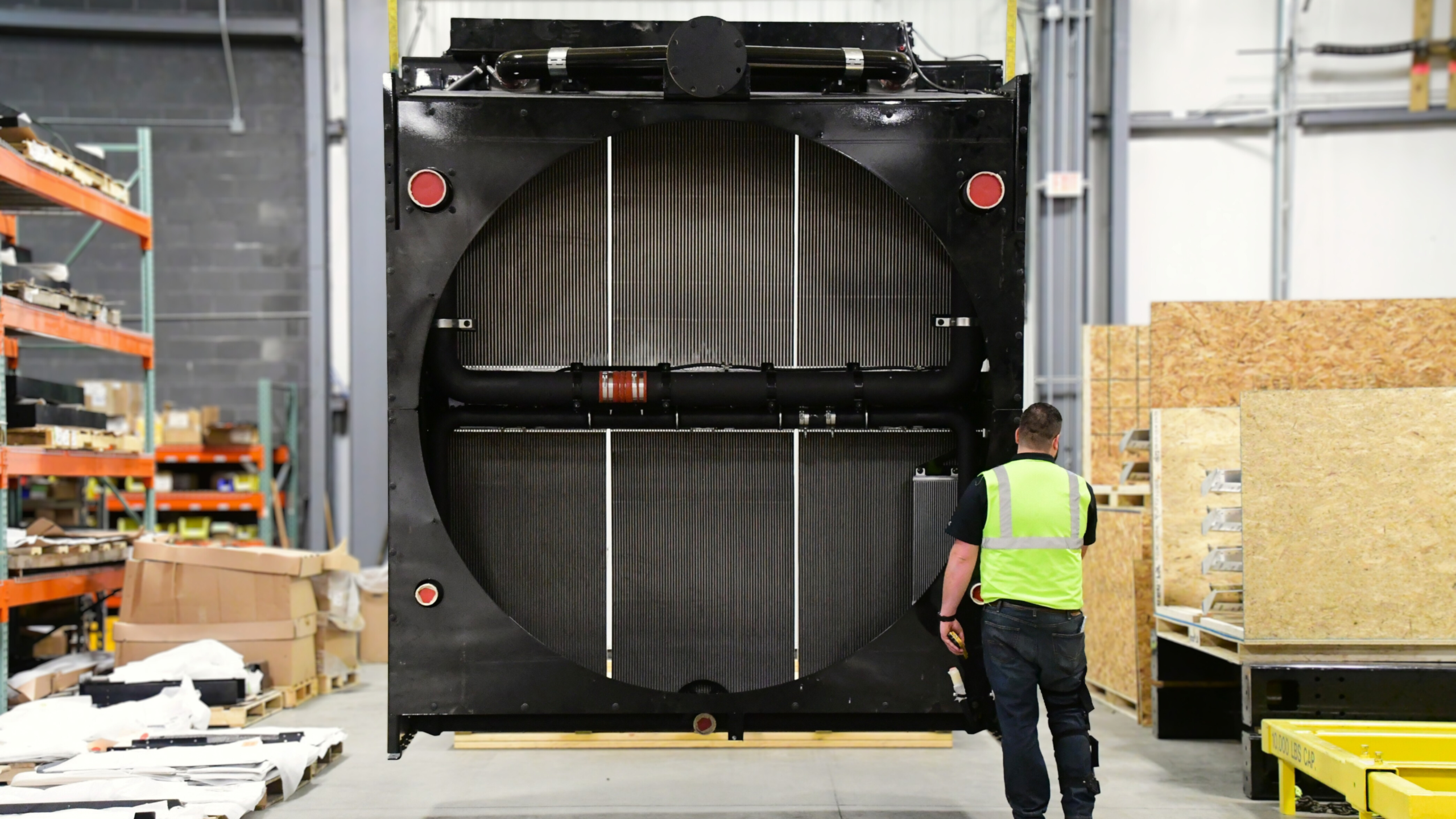
For one of our customers, a global manufacturer of industrial power generators, these principles transformed their operations. Facing explosive market demand but crippled by space limits and a tangled component supply for complex radiator systems, they were unable to scale. By taking ownership of their global supply base for these critical parts, implementing strict lot tracking and managing the entire build, we solved more than a parts problem. We removed $60+ million in inventory from their balance sheet, achieved 100% on-time delivery for components and supported them through 300% order growth without a hitch.
This is the real victory. Turning component supply from a risk into a reliable foundation for growth.
The global landscape will continue to shift. Tariffs will ebb and flow, new logistical challenges will emerge, and demand will remain volatile. But when you build a supply chain with deep visibility, strategic diversification and simplified complexity, you build a system designed to deliver, no matter what the world throws at it. At World Class Industries, that’s the standard we work toward every single day.
If your team is seeing long lead times, margin pressure from tariffs, or complexity that keeps creeping up, WCI can help.