Strategic Vendor Management That Improves Throughput, Not Just Purchasing

Manufacturers today face pressure from every direction — supply chain volatility, labor shortages, rising inventory costs, production constraints, and growing customer expectations. The instinctive response is to add: more suppliers, more systems, and more processes. Each addition solves an immediate problem. But over time, those tactical fixes compound into something far more difficult to manage: a fragmented supply chain weighed down by structural complexity.
That complexity shows up everywhere:
- Too many supplier touchpoints
- Excess inventory and floor space consumption
- Inconsistent quality
- Production bottlenecks
- Communication gaps between vendors
- Teams spending more time managing suppliers than improving operations
At World Class Industries, we believe strategic vendor management should do more than reduce supplier count. It should strengthen your entire operation.
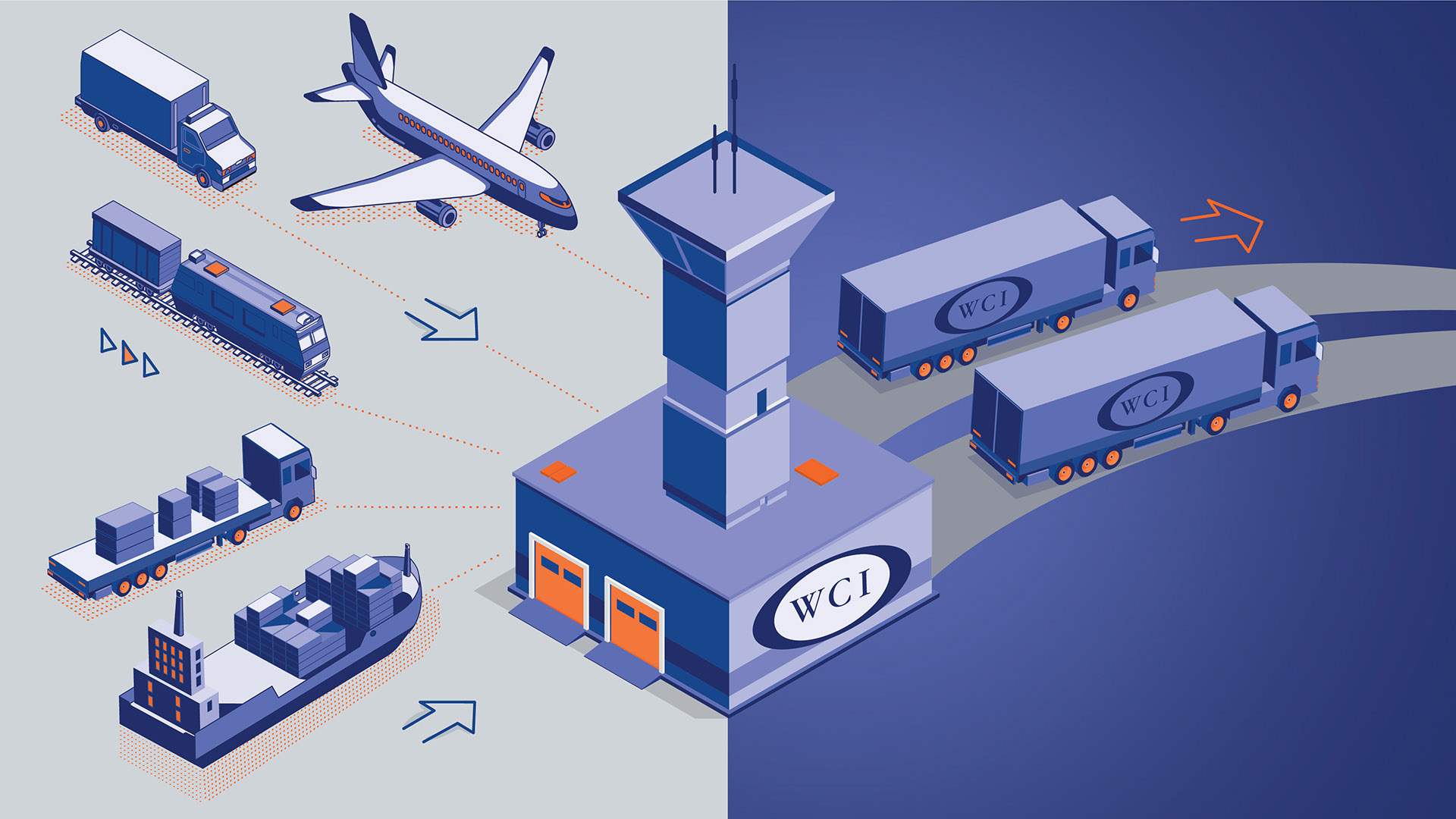
That’s why WCI approaches strategic vendor management through integration — combining supply management, assembly, kitting, logistics, and production support into one streamlined solution designed to improve throughput and optimize value.
Strategic Vendor Management Starts with Integration
Most manufacturers manage suppliers in silos. Purchasing negotiates contracts, logistics coordinates shipments, warehousing holds inventory, and production absorbs the gaps in between. Each function operates independently, and the seams between them become the source of daily disruptions. The result is often a disconnected system where communication gaps thrive, lead times are misaligned, quality suffers, and delays become part of daily operations with no individual ownership.
WCI eliminates those seams by serving as a single point of contact across the entire supply chain.
We manage thousands of global suppliers and millions of parts, integrating procurement, inventory management, assembly, kitting, packaging, and fulfillment into our customers’ manufacturing operations. The result is not just a leaner vendor list, it is a fundamentally different operation model. Instead of managing multiple vendors independently, customers gain a strategic partner who takes ownership of the entire process and is accountable for outcomes.
As one global OEM customer explained:
“There is not another vendor that we work with in the country like World Class Industries. WCI is unique and they manage from start to finish — from the bill of materials to product testing. They work the routing between vendors, then pick, pack, and ship.”
That level of integration reduces supplier noise and creates a more resilient supply chain.
Supplier Consolidation Without Losing Control
Supplier consolidation is routinely framed as a cost-reduction initiative. Cutting supplier count without equally rigorous attention to quality assurance, delivery performance, traceability, and inter-supplier coordination often trades one set of problems for another.
WCI’s approach to strategic vendor management is built on a different premise: simplification should drive operational improvement, not just administrative relief.
We help customers:
- Consolidate fragmented supply bases
- Reduce inventory carrying costs
- Improve production flow
- Eliminate line-side inefficiencies
- Create scalable supply solutions
- Increase visibility and accountability across operations
Our integrated supply model allows customers to offload the burden of coordinating multiple vendors while retaining full confidence in quality, delivery, and operational responsiveness.
The results speak directly to both the balance sheet and production floor. In one WCI engagement, a customer removed over $10 million in inventory from their balance sheet while simultaneously increasing throughput to meet rapidly scaling demand. In another, WCI helped recover valuable manufacturing floor space by taking ownership of supply chain coordination, inventory management, and just-in-time delivery sequencing – giving the customer room to grow without a capital investment.
The goal is not simply fewer suppliers.
The goal is a stronger, more efficient supply chain.
Managing Vendor Performance Beyond the Scorecard
Periodic supplier reviews measure past performance. Strategic vendor management prevents future failures. The distinction matters because in high-throughput manufacturing environments, by the time a scorecard flags a problem, the production line has already felt it.
WCI manages supplier performance through purpose-built systems designed to support quality, delivery accuracy, traceability, and throughput. Depending on customer needs, this can include:
- Supplier lot and serialization tracking
- Production sequencing
- Inventory visibility systems
- Quality verification processes
- Real-time production analytics
- Customized packaging and fulfillment solutions
Our role is not passive oversight. We actively manage the flow of materials, information, and production readiness, anticipating disruptions before they impact operations.
As supply chains become more complex, many OEMs discover that managing vendors internally pulls focus away from core competencies like engineering, production, and innovation.
WCI helps reduce that operational burden.
Coordinating Multiple Vendors Without Creating Bottlenecks
Managing multiple suppliers under normal conditions is already demanding. When production schedules compress, customer demand spikes, or a single supplier misses a commitment, complexity compounds fast, and the consequences cascade.
That’s precisely where WCI creates value.
By aligning supplier management with assembly, logistics and fulfillment operations, WCI creates a coordinated system that improves responsiveness because every link in the chain knows what is expected.
Rather than operating like disconnected links in a chain, WCI helps supply systems function more like a cable: integrated, flexible, and stronger under pressure.
This approach allows manufacturers to:
- Scale production more efficiently
- Reduce disruption risk
- Improve on-time delivery
- Increase responsiveness to demand shifts
- Create more predictable operations
For customers experiencing rapid growth, this flexibility becomes critical. WCI has enabled OEMs to scale production significantly, and in some cases dramatically, without expanding factory footprint, adding headcount, or increasing supplier management overhead. Growth is absorbed by the system, not the organization.
Strategic Vendor Management Should Improve Throughput
At WCI, strategic vendor management is not just about purchasing efficiency. It is about helping manufacturers improve throughput, create capacity, and simplify operations through integrated supply and assembly solutions.
We do this by becoming a true extension of our customers’ operations — coordinating suppliers, managing complexity, improving visibility, and building systems designed to support long-term performance.
Because when supply chains are fragmented, every disruption creates friction, and friction costs more than most organizations ever measure.
But when supply and assembly are integrated strategically, manufacturers gain something far more valuable than cost savings: They gain operational momentum and the competitive advantage that comes with it.